Introduction
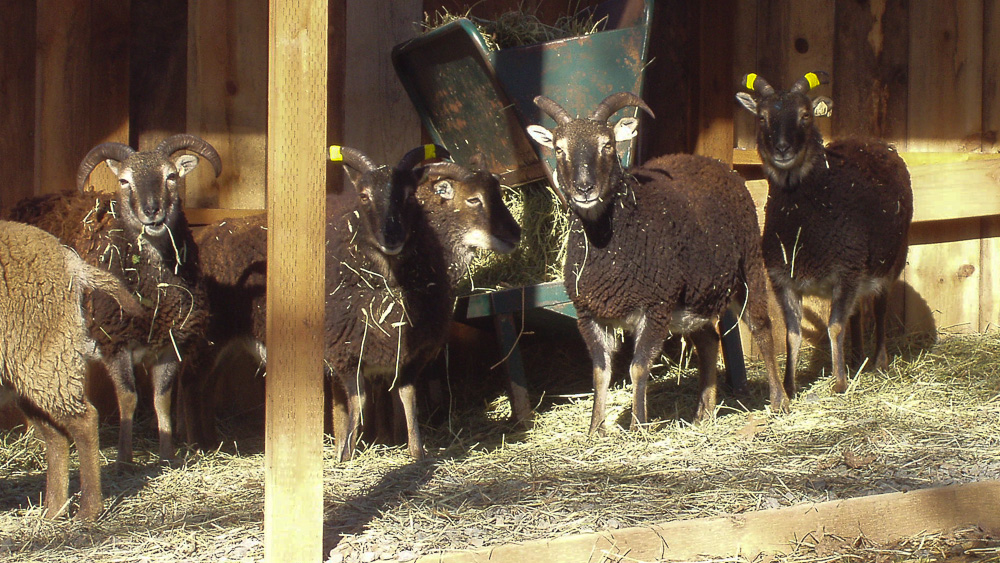
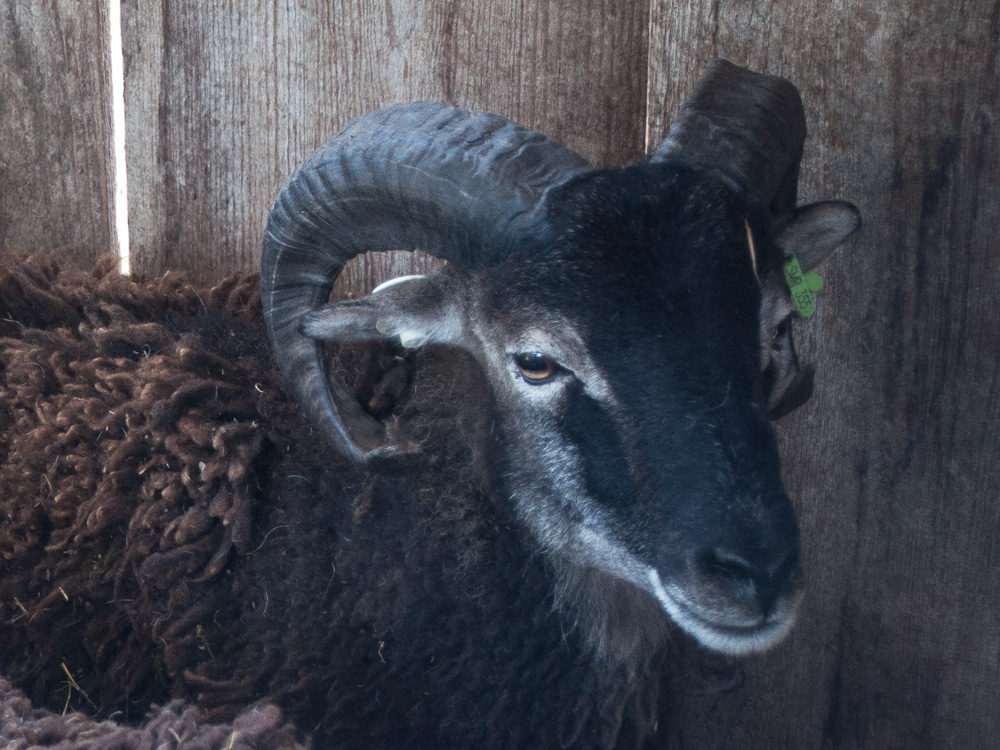
We are proud of the diversity of our flock of RBST-registered British Soay Sheep. At its maximum, our collection of 100 adults included 74 breeding ewes who were the offspring of almost 60 different mothers and over 40 different fathers. Although our operation is now much smaller, and we no longer set up six breeding groups each fall, we have left the following discussion of our former large-scale formal rotational conservation breeding system intact. We hope it will be of help to other Soay breeders who also are committed to preserving the diversity of Soay Sheep.
Dual Purposes
Each spring's lambs serve two purposes from the standpoint of conservation breeding. Most of the lambs will be dispersed as starter flocks to people interested in participating in the overall conservation of this ancient and unique breed. We set up our breeding groups each year according to a plan, described below, that ensures that each year's lamb crop contains a wide range of genetic combinations and, importantly, that there will also be a lot of variation between years as well. This is the first of the two purposes.
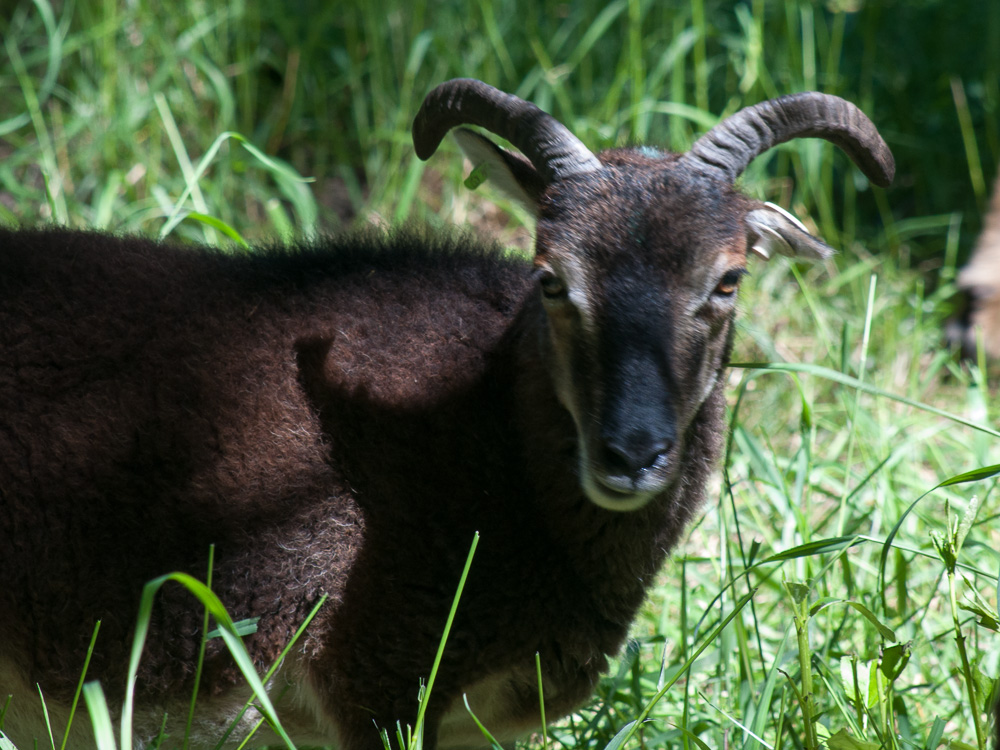 Of course we need to hold back some lambs each year – young rams to serve as flock
sires two to five years later, and ewe lambs to replace aging ewes. Since we no longer
bring new animals into our flock, the ewe lambs and ram lambs we keep are the only way we
have to perpetuate the flock's genetic makeup. So we want to be very deliberate in what we
are doing. This, then, is the second purpose.
Of course we need to hold back some lambs each year – young rams to serve as flock
sires two to five years later, and ewe lambs to replace aging ewes. Since we no longer
bring new animals into our flock, the ewe lambs and ram lambs we keep are the only way we
have to perpetuate the flock's genetic makeup. So we want to be very deliberate in what we
are doing. This, then, is the second purpose.
There are two elements to our overall conservation breeding strategy. The first involves flock size, simply to keep a large number of sheep. The second is to maintain our flock as three distinct bloodlines through a system of rotational breeding. Let's consider these in sequence.
Flock size
Genetic theory teaches us that, within reason, larger populations are less likely to lose genetic diversity through chance alone. The idea is that the number of breeding animals should be large relative to the amount of genetic diversity to be preserved. The amount of diversity can be thought of as the number of distinct alternative forms of genes, or alleles. In other words, we want to have enough breeding animals so that every allele is carried by several sheep at least. This minimizes the chances that a particular allele will be lost forever simply because no sheep that carried it happened to pass it on.
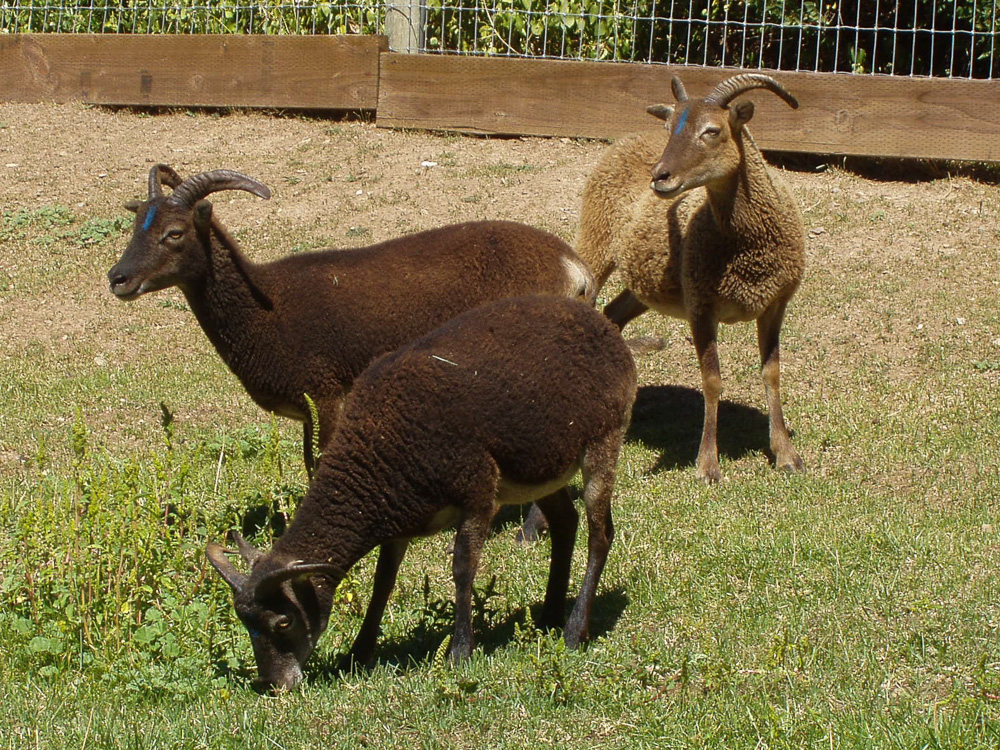 Conservation breeding isn't really about conserving sheep but rather sheep genes. The
sheep themselves are just containers of genes, and their role is to transmit those genes
to new containers, their offspring. Suppose that British soay as a group carry 12
alternative forms, or alleles, of some particular gene. Assume we are lucky enough that
our flock as a group carries all 12 of these alternatives. The point of conservation
breeding is to ensure that all 12 will be passed on the next generation. Because an animal
transmits only half of the genes it carries to each offspring, it is best if each allele
is carried by multiple animals. This increases the chances that every allele will
be passed on to at least one lamb.
Conservation breeding isn't really about conserving sheep but rather sheep genes. The
sheep themselves are just containers of genes, and their role is to transmit those genes
to new containers, their offspring. Suppose that British soay as a group carry 12
alternative forms, or alleles, of some particular gene. Assume we are lucky enough that
our flock as a group carries all 12 of these alternatives. The point of conservation
breeding is to ensure that all 12 will be passed on the next generation. Because an animal
transmits only half of the genes it carries to each offspring, it is best if each allele
is carried by multiple animals. This increases the chances that every allele will
be passed on to at least one lamb.